
THE GOALKEEPER
 |  |  |
|---|---|---|
 |  |  |
 |  |  |
Football-Biology


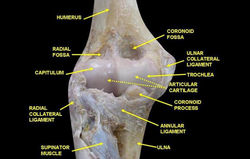
THE ARTICULAR CARTILAGE:
It is a whitish, shiny substance that covers the ends of the bones in the joints. Its function is to facilitate sliding and joining movements. In football players, as a result of multiple injuries and excess activities, these joints wear out in an accelerated way, causing what in medicine is commonly known as "footballer's ankle."
LINKS:
The ligaments are white fibrous tissue, their function is to prevent unwanted movements. In the knee, for example, they are located in the lateral sections and avoid the flexion from side to side. Ligament injuries are very common in soccer, stretching and tearing of the collateral ligaments is also very common in soccer. MUSCLES:
Muscles have four fundamental characteristics or capabilities:
Excitability: the ability to respond physically and electrically to chemical and nerve stimuli arriving from neurotransmitters.
Contractility: the ability to contract to generate the necessary tension and respond to action.
Extensibility: the ability of the muscle to extend or expand to avoid damage. Elasticity: is the ability of the muscle to return to its original place, size and shape after expansion or contraction.
THREW:
There are several ways to hit a ball, printing different powers, directions and in the case of the more skilled, effects, which determine the direction the ball will take in flight. All leg muscles participate directly in the action. Finally, we have the jump and the head, where the whole body works. However, the feet and the muscles of the legs are fundamental in this instance. A soccer player jumping for a ball is the most similar to a predator capturing its prey, especially at the anatomical level.